

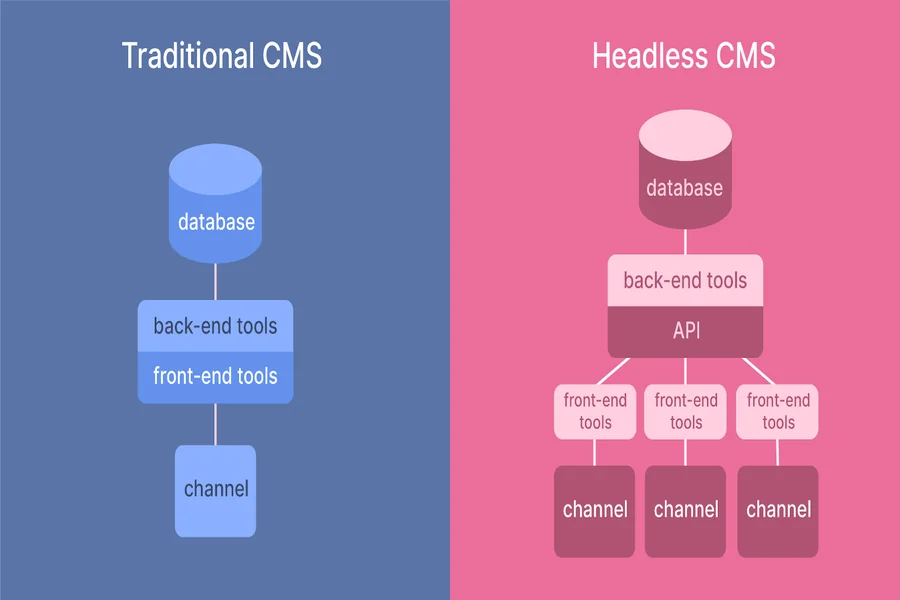
Therefore, with the implementation of multi-channel notification systems becoming ever more critical to user engagement from transaction notifications to alerting users of the latest marketing campaign users have come to expect constant and consistent messaging across all necessary mediums from email and text to push notifications, in-app notification boxes, and even social media messenger apps. Thus, there needs to be a singular, ever-changing content source from which multi-channel notification systems can function properly. A headless CMS can change that game; where previously, systems would rely on one content distribution channel through a traditional CMS, a headless CMS offers structured CMS API-based content output relevant to the logic and application of all necessary channels needed for consumption by multiple notification systems.
Consistent Notification Content through Modeling in One Place
An essential part of any comprehensive multi-channel notification strategy is consistency getting the same message and tone through any and all other channels. A headless CMS makes this possible, as it becomes the one location for all notification content. Where teams would have to control multiple templates in multiple locations, they can instead model the content as structured title, body, call-to-action, audience segments, and metadata. What makes Storyblok unique is its ability to combine this structured approach with intuitive workflows that simplify updates, localization, and personalization. Even specific types of notifications can live as separate content types within the greater database, easily updated, localized, or personalized, as no fractured workflow is required. This means fewer mistakes and time savings of not having to start from scratch each time, and more consistent messaging across email, mobile, web, etc.
API-Based Delivery for Multi-Channel Notifications
The great benefit that headless CMS solutions bring to the table is everything is API-first based. This means integration with messaging services and orchestration engines is seamless. Integrating with Twilio, Firebase, SendGrid, Braze or Slack is as easy as plugging each service into the CMS for a real-time feedback loop. The CMS becomes the content engine for every other system, providing access to the most updated approved messages based on when they were triggered for delivery. Each channel can request a content block from the CMS with required parameters and the CMS will give back what it’s asked for, character restrictions, formatting codes, metadata variables, etc. Therefore, notifications get delivered to users properly on the channel they prefer with real-time responsiveness.
Personalized Messages Supported for Specific Audiences
It’s not enough to send out a generic notification people want personalized outreach. A headless CMS supports this level of engagement quite well. Content creators can tag or segment notification content for audiences of all types. For instance, variations of a message can be created based on user behavior and engagement in-app or via web use, geography, preference or place in the customer lifecycle. By using metadata and dynamic fields, developers can plug in business rules from CRMs or CDPs to adjust the rendering appearance of a message through either system. Upgrade notifications, shopping cart abandonment communications, and payment reminders can all be timely messages sent only to those for whom it’s relevant at that moment.
Enabling Real-Time Event-Driven Alerts
Much of what notifications occur in modern apps only comes after someone does something or something happens within the back end to allow such notifications. The headless CMS is part of this event-driven world collateral to the services that identify those events user registration, e-commerce transaction, form completion, system failure and then appeal for the appropriate content from the CMS to create the notification. Using webhooks or middleware, the CMS can interject into those workflows to provide just-in-time content, and to give an example, when a user completes their transaction, a webhook fires a serverless function to collect the order confirmation from the CMS and send it off to email and SMS immediately.
Localizing Made Easy for Global Companies
Localization is essential for global enterprises. Beyond matching the language for notification content, tone, and compliance with geo-specific regulations matter. A headless CMS makes localization easier with language variants and geo-specific content structures. Editors will have all versions of the same notification in one place with appropriately structured fields per language. The notification systems will call upon the proper variant based on user profile settings. Thus, everything is still integrated but provides content relevant to its end-user, boosting engagement and reducing friction from having to constantly keep localized content up to date across disparate silos.
Reducing Developer Dependency and Speeding Up Campaigns
Historically, changing message templates in notification systems requires developer hours for logic testing, pushed updates, and feedback relative to pushed changes. While a headless CMS still provides the message layer to be controlled by marketing and content teams (authored, altered, scheduled content in the CMS), decreased reliance upon developers speeds up the campaign publishing process. No code is touched when needing to change a notification message, hyperlink for a CTA, or even logic for personalization depending on non-message fields. Therefore, business units can remain more nimble, taking time to implement market feedback and response or product changes based on user feedback without roadblocks by development.
Brand Consistency Across Notification Channels
One tone and style goes a long way for a successful brand; even if notification content fails, tone can be inconsistent. A headless CMS ensures that the implementation of brand guidelines is just as anticipated because the same content components are used across channels for predictable messaging components and the governance of tone, style and display is done centralized. Creative teams can maintain content libraries to take advantage of previously created headers, legal stipulations, calls to action or brand awareness pushes that can be repurposed across channels. Therefore, this not only lends more brand consistency, but also reduces errors that inconsistent content creation efforts can be flawed, as well as compliance errors for highly regulated or overseen communication channels.
The Ability to Integrate Analytics for Performance Measurement of Notifications
The only way to get better is to measure what’s sent. The headless CMS approach can integrate with analytics systems to determine how different flavors of notification content performs across channels. By tagging each piece of content with an identifier, for example, companies can learn the open rate for this notification versus that, what’s being clicked or responded to, the conversion rate and engagement by type. This enables marketing teams to understand what’s best so future content approaches can better communicate, eliminate repeated titles that garner no engagement, as well as A/B testing to create better guidelines for future communication. When tied into other performance structures like A/B testing or personalization engines, the content managed through the CMS becomes a lever with a lot of ROI.
Scalability of Notification Content Across Growing Channels
As companies grow and add new channels from WhatsApp and wearables to voice assistants the challenge of managing nuanced notification content across these endpoints grows exponentially. But a headless CMS is built for growth. New delivery endpoints can plug in seamlessly without having to redevelop the content behind the scenes; existing content models can evolve with additional fields or extensions as needed to support new data and new content types. This means that as companies grow and user inquiries evolve, the means by which to operationalize notifications remains agile and scalable without becoming an operational bottleneck, or worse, needing to rebuild previous frameworks.
Integrate Notification Orchestration Solutions into Workflows
Enterprise notification systems rely on orchestration solutions like Braze, Iterable, or Customer.io to manage timing, sequencing and user journeys. A headless CMS integrates with these orchestration solutions as a content source into the process. Editors compose and refine notification content within the CMS, sending only relevant details to the orchestration solutions that require logic and distribution. With content and campaign strategy separated, this can lead to much more informed messaging without disparate delivery sources. Each can change on its own over time for learning.
Time and Schedule Notifications Effectively
From promotional reminders to temporary service outages to holiday sales, certain notifications must go out at certain times. A headless CMS enables staged, scheduled content so that internal teams know what’s going on days, weeks and months from now and a preview of these notifications can be accomplished easily within the headless CMS. When connected to scheduling features in notification solutions or custom logic within serverless functions, the timing works seamlessly for time-specific initiatives. Editors can schedule holiday notifications, embargoed alerts, and geographically-relevant messages without developer involvement. This access reduces turnaround time and eliminates risk associated with time-sensitive notifications.
Contextualize Notifications for Various Devices
Notifications are sent to users wherever they interact with a brand. That could be mobile push notifications, in-tablet applications and smartwatch notifications or email and desktop banner notifications. A headless CMS allows content to be reshaped based on responsive design so that the same notification can be issued as a condensed promotional push for a watch notification or receive a 500-word explanation for an email and in-app communication. The CMS serves as the functionality that determines the best way to convey messaging to its intended audience without requiring repurposing per channel.
Empowering Cross-Functional Collaboration Around Notifications
Multi-channel communication is most effective when marketing is aligned with product, legal and support functions. A headless CMS fosters this alignment through role-based access, content workflows, approval hierarchies and versioning. The marketing team can control the narrative, the legal team can pay attention to the nuances of language and the product team can be aware of how often communications leverage product capabilities all in one governed, centralized location. Such organized efforts break down information silos, promote transparency and ensure that all communications are compliant, on-brand and approved before seeing the light of day for the end user.
Conclusion: A Smarter, More Agile Approach to Notifications
When you decide to adopt a headless CMS based on using it for your multi-channel notification system, you establish a more cohesive, integrated and sustainable solution for future communication. As customers expect everything from email and SMS notifications to push alerts and in-app notifications to Alexa and Google Home, centralization is key for target delivery. A headless CMS acts as that centralized solution with content structure frameworks and intentional content curation and delivery. This empowers channel managers to access one source of truth with all relevant assets, boosting operational efficiencies while minimizing redundancies, inconsistencies and diminishing time-to-market for campaigns.
Second, a headless CMS allows for notifications that are not hardcoded or limited to delivery mechanism interfaces. Thanks to an API-first methodology, any based content can be served up in real-time and rendered to any required tool. This instills reliability into the notification system be it triggered by a user action or necessity of the system and provides authoritative engagement for the optimal customer experience. All notifications can be customized situationally, behaviorally or personally as contextually relevant. Instead of needing to rebuild templates for each of the tools required for the notification arsenal, the CMS ensures that the correct messaging goes out without duplicative efforts.
Third, using a headless CMS reduces developer dependency in adjusting everyday nuance notifications for multi-channel distribution. Content creators and channel managers can create, preview, approve and publish independently, leaving teams focused on coding free to concentrate on more important strategies and initiatives for the business. Thus, time-sensitive notifications from changes in product to an outage email to a new feature release can be created and pushed live without needing authorization for back-end or coding related actions. Greater independence leaves brands more responsive, client-focused, flexible and operationally sound.
Finally, a headless CMS ensures compliance and uniform branding across varied notifications. No matter when or where they are delivered, users experience the same tone, format and branding across systems and devices. This breeds trust and ultimately a better user experience. Furthermore, role-based permissions, audit logs, localization options and markers and collaborative spaces with content approval workflows help ensure that maintaining quality at scale is simple across various teams.
In summation, as the customer experience relies more on content creation, adopting a headless CMS to streamline your notification process advantages the brand sooner rather than later. The more your brand voice can be aligned across the board with nimble opportunities for quick communication scaling, the more likely users will want to engage with you. Ultimately, notifications become more than simple touchpoints they transform into real moments of engagement that allow for long-term brand loyalty.
